Catch up on what’s happening at Keystone and check out insights, deep dives, and industry-defining work from our experts.
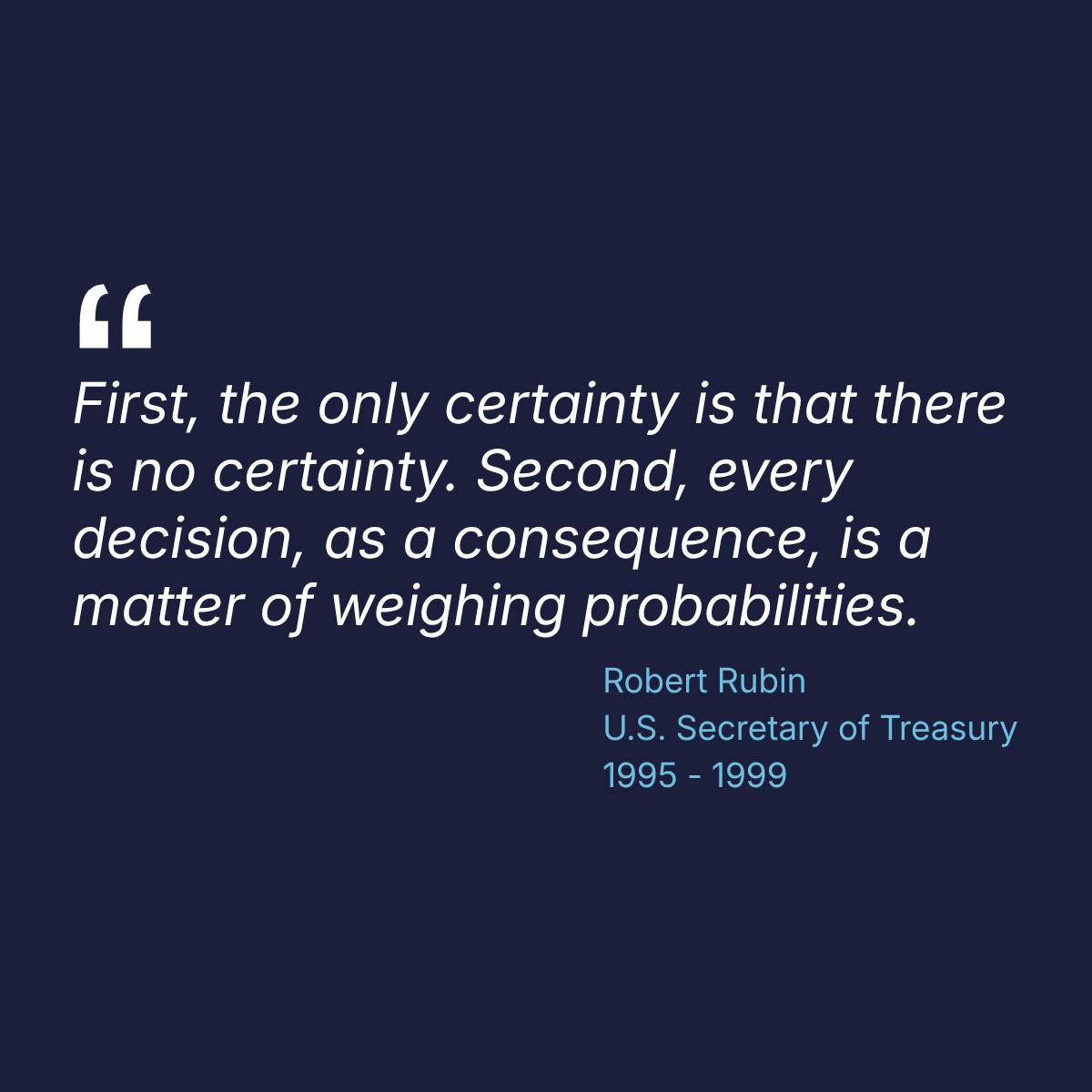
Every week, a supply chainplanning team makes the same mistake. Not for lack of data or software. Theyfail because they struggle to predictuncertainty and make economic decisions that account for it.This is not easy. Supply chainplans involve bulk commitments — production runs, orders timed to supplierdiscounts, labor schedules locked weeks ahead. Meanwhile, supply chains mustconstantly react to a variety of real-time dynamics. For human beings, constantlyquantifying uncertainty is hard — we carry bias and can only hold so manythings in our heads at once. Making economically optimal decisions to managethat uncertainty is harder. The two are connected — and that connection iswhere most planning systems break down.A Practitioner’s Framework for Managing Uncertainty and Decision MakingRobertRubin—70th United States Secretary of the Treasury and former co-chairman ofGoldman Sachs—spent decades navigating decisions under irreducible uncertainty.In a 1999 commencement address to the University of Pennsylvania1, Rubin distilled that experience into four principles he had carried from WallStreet to Washington.“First, the only certainty is that there is no certainty. Second, everydecision is a matter of weighing probabilities. Third, despite uncertainty wemust decide and we must act. And lastly, we need to judge decisions not only onthe results, but on how they were made.” — Robert Rubin, University ofPennsylvania Commencement Address, 1999Rubin arrived at the firstthrough direct experience. Early in his Wall Street career, he watched asecurities trader take an enormous position in a stock because he wascertain—absolutely certain—that a particular set of events would occur. Rubinexamined the same situation. He agreed there were no visible obstacles. Butwhere the other trader was committed to a single outcome, Rubin recognizeduncertainty and sized his position accordingly.Something unexpected happened.The projected events did not occur. Rubin caused his firm to lose money—but notmore than it could absorb. The other trader lost far more than was reasonable.This cost him his job.That asymmetry—between the cost of false certainty and the cost of calibratedconfidence—is the entire framework.“A healthy respect for uncertainty, and focus on probability, drives younever to be satisfied with your conclusions.... Andunderstanding that difference between certainty and likelihood can make all thedifference. It might even save your job.” — Robert Rubin, 1999Rubin’s four principles map tosupply chain planning and decisions—and life decisions—with striking precision.1: The only certainty is that there is no certainty. If there areno absolutes, then all decisions become matters of judging the probability ofdifferent outcomes and the costs and benefits of each.2: Every decision is a matter of weighing probabilities. Hold yourbest estimate honestly. State your confidence explicitly. Remain prepared toupdate when the signal warrants it.3: Despite uncertainty, we must decide and we must act. Alldecisions are based on imperfect or incomplete information. But decisions mustbe made—on a timely basis.4: Judge decisions not only on results, but on how they were made.In a world where outcomes command all the focus — quarterly accuracy numbers,service levels, fill rates — the discipline of a rigorous process is worthmore, not less. A good process with a bad outcome is still a good process.Judging otherwise produces the risk aversion that makes the next decisionworse.Further disciplines are embeddedin his framework. Information has value only when it would change the decision.Gather until that marginal value approaches zero—then act. Two Failures.Two Fixes.Rubin’s framework reveals twoplaces where current systems break down.Failure 1: Uncertainty RepresentationThe failure: Rubin’s first twoprinciples are unambiguous: certainty does not exist, and every decision is amatter of weighing probabilities. Conventional planning systems violateboth—not through bad data, but through the architecture of the forecast itself.A point forecast treats a futureorder as a known fact. Whether a customer orders, in what quantity, andwhen—each is a probability. Collapsing that distribution into a single numberis pretending there are absolutes in an uncertain world.The standard response is to adderror bands around the point estimate — a symmetric range, drawn fromhistorical error, that says the actual outcome will likely fall somewherebetween X and Y. But symmetric error bands do not solve the problem — they decorateit. A customer who delays an order is not the same scenario as a customer whocancels one; planning systems built on point estimates cannot distinguishbetween them, and cannot respond differently to each.The fix: The right question isnot: howmuch will this customer order? It is: what is the likelihood of anorder, for what amount, at what time? A probabilistic forecast answerseach part explicitly. It produces a range of outcomes—high-probabilityscenarios and low-probability ones. That is honest planning.Failure 2: Signal Effectiveness & CurrencyThe failure: Rubin’s thirdprinciple: gather information until it would no longer change the decision—thenact. Conventional forecasting systems violate this principle.Conventional systems fail tokeep up with real-time signals. A customer who ordered today, a buyer pasttheir reorder window, a large order that just landed—this context exists assignals in your ERP right now, but your forecast has likely not caught up toit.Conventional systems alsoaggregate order events into weekly or monthly buckets before any model sees thedata. In doing so, they destroy the most valuable “demand sensing signals” inthe process.Consider a large repeat customerwho orders 18,000 units every four weeks, very reliably. This should be amongthe easiest demand patterns to forecast. But traditional forecastingmethodologies smooth this demand across the period and predict 4,500 units foreach week. A traditional model sees zeros and large spikes. It concludes demandis volatile and forecasts accordingly. The result: manufactured forecast erroron a signal whose true underlying variance is almost zero. The model inventedvolatility that does not exist—because it destroyed the signal that would haverevealed the true pattern.The fix: Capture every orderevent at the moment it occurs and preserve its structure before time-bucketaggregation can destroy it. Run the forecast against the event stream, not aweekly summary. Demand signals are always on. The forecast should be too.Five Disciplines for Planning Under UncertaintyRubin’s framework does not stayin the realm of philosophy. Applied to supply chain planning, it produces fiveconcrete disciplines — properties of any planning approach that takesuncertainty seriously.1. Uncertainty is the job. A plan sized to a single forecast number issized for one scenario. Demand does not arrive in single scenarios. Buildagainst a distribution — each outcome with its probability attached.2. Hold estimates as probabilities. A point forecast does not express confidence— it suppresses it. Every estimate should carry an explicit probability. Thequestion is not what will happen, but how likely each outcome is and what eachone would cost.3. Gather — then act. A forecast that updates on a weekly ormonthly cycle is not sensing demand — it is ignoring it between updates. Everyorder event carries signal. The forecast should update when the signal warrantsit, not when the calendar permits it.4. Inaction has a cost. Staying with a plan that no longer fitsreality is a decision — it just does not feel like one. The cost shows up asexcess inventory, missed service levels, and trapped working capital.5. Judge process, not outcome. One bad quarter is not evidence of a badplanning process. Evaluate the methodology: was uncertainty representedhonestly? Were signals captured in real time? Were decisions made onprobabilities? Outcomes are what you measure. Process is what you manage.The Pressure TestPull your forecast for any topcustomer. Is it a point estimate? Does it reflect the actual probability oftheir next order — in what quantity, at what time? If the answer is no, thesystem is manufacturing false certainty, and your team is spending hoursright-sizing this in collaborative planning meetings.Apply the same test to yoursignals. When did your forecast last update? If the answer is measured inweeks: what changed while you weren’t looking?1 Robert E. Rubin, remarks to the University of Pennsylvania Commencement,Philadelphia, May 17, 1999. Archived content, U.S. Department of the Treasury.

One of the things I appreciate about Raunak Singh is his ability to take a complex concept and make easy to digest. He does it with a smile and without losing any precision. Raunak leads the science team at Keystone.AI. Before that, he spent more than a decade at Amazon — building and leading the forecasting infrastructure that drives Amazon's global supply chain. In 2017, he was part of the team that deployed large-scale deep learning for SKU-level forecasting at industrial scale, a first of its kind. During COVID, he led strategic capacity planning for Amazon's physical network, presenting forecasts to executives as the company navigated an unprecedented surge in consumer demand. I was able to get Raunak’s perspective what's broken in forecasting, what excites him about Keystone.AI, and where he sees us change decisions for the better. - Jason TenenbownWhat's the single biggest mistake enterprises make with forecasting?It comes back to something I've had to remind myself of throughout my career: forecasts are a means to an end. It's easy to get obsessed with improving forecast accuracy — and accuracy matters — but at the end of the day you're trying to improve outcomes. You're trying to make better decisions.And making good decisions requires more than a single number. Point forecasts are not sufficient. You need to understand the range of outcomes that could happen — the uncertainty around the number. But you would be shocked by how persistently the industry still thinks only in point predictions. Probabilistic forecasts are rarely used to drive real operational decisions, even at very sophisticated companies."Forecasting is humbling. You make a prediction every day and then you find out how right or wrong you were. The famous saying is that forecasts are always wrong. You just try to be wrong in less costly ways."Why does the industry keep defaulting to a single number?A single number is simpler. It's easier for a human being to reason about. And humans tend to be very sure of themselves — 'I know my business, I know this product line, this is what demand is going to be.' When you push them on their confidence, most people underestimate how much uncertainty actually exists around that number.But here's what I've come to believe is the deeper problem: it's not a forecasting literacy problem. It's a broken API problem.An enterprise runs on plans. And the only thing that incorporates real intelligence about the future into those plans is the forecast — everything is encapsulated in it. It's the only forward-looking signal. And that signal is deeply context-dependent. What's broken is that there are very few APIs to inject that context. People don't need to understand forecasting. We need to build systems that can take the context that already exists inside the enterprise and produce more intelligent forecasts from it."It's not a forecasting literacy problem. It's a broken API problem. The forecast is the only forward-looking signal in an enterprise plan — and there are almost no mechanisms to inject real context into it."What are humans actually good at versus machines, when it comes to forecasting?There's a real asymmetry, and understanding it is important. Time series forecasting models are, at their core, mathematical machines that extrapolate past trends into the future. A model doesn't inherently know if it's forecasting for glass or for tires. It doesn't know you just lost a major customer, or that a competitor is about to launch, or that the macro environment is about to shift. It's myopic by design.Humans, on the other hand, are genuinely bad at fine-grain forecasting — predicting exactly what a specific SKU will sell two weeks from now. Machines are much better at that. But humans, especially senior leaders who really know their business, are quite good at reasoning about complex dynamics at a macro level. They understand competitor moves. They have strategic foresight. The challenge has always been: how do you harness that kind of enterprise intelligence and actually get it into the model?That's what AI makes possible. By building the right pipelines — what we call RAIN™ — we translate enterprise context into demand signal in ways that weren't feasible before. Not from throwing a ton of information into a large language model. From ingesting the fine-grain event streams that actually capture how your best customers buy."Humans are bad at fine-grain forecasting — predicting what a specific SKU will sell two weeks from now. Machines are much better. But humans are far better at reasoning about complex macro dynamics. The question is: how do you get that context into the algorithm?"Let's go back to the beginning. How did you get into this field?I grew up in India, and my undergraduate was hardcore production engineering — working on the shop floor, understanding physical machines, tooling, manufacturing. Very hands-on, grounded engineering.Then I came to Columbia University in New York to study operations research and industrial engineering, with a focus on large-scale mathematical optimization. My first real job out of grad school was in the airline industry, doing pricing and revenue management. It turns out figuring out how to price airline seats is fundamentally a mathematical optimization problem: you forecast passenger demand, then run an optimization to maximize revenue. So, from day one — even before the term 'data science' existed — I was working at the intersection of prediction and decision.How did you end up at Amazon?My manager at the airline software company left for Amazon in 2012. He reached out and said there was interesting stuff happening there. At that time Amazon was deeply invested in the idea of building systems that could make decisions automatically — they believed in it, even though the technology was still early. I went through the interview and joined what was essentially Amazon's version of Groupon.The first problem they gave me: 'We send 150 million emails a day with daily deals, and we don't know how to order the deals in each email for each customer. Should we send you the massage deal or the skydiving deal?' They were doing it with business rules. I built a model to predict your propensity to click — based on what you'd engaged with before, how far a location was from where you live. Very early machine learning. Very simple linear regression by today's standards. But that's how I made the jump from operations research into what would later be called data science.And then supply chain became your focus?I got into supply chain and spent most of the next decade there. I eventually led the forecast team for Amazon's supply chain — everything from fine-grain, SKU-level forecasting that automatically drives inventory placement across Amazon's global network, to what we called top-line planning: strategic forecasting for capacity, infrastructure, and workforce needs years into the future.One of the things I'm proud of from that period is being part of the team that deployed large-scale deep learning algorithms for SKU-level forecasting at Amazon in 2017. At that time there were research papers on deep learning for time series, but nothing had been deployed at that kind of industrial scale. Seeing it actually transform how supply chain decisions were made — that was remarkable.Then COVID hit, and I was leading science for top-line planning. Overnight, consumer demand shoots up. The questions became: how big does this physical network need to grow? How many people do we need to hire for fulfillment centers? How many buildings do we need to open? I was in the rooms where those decisions were being made — presenting the forecast, watching executives try to reason about an unprecedented set of uncertainties. Humbling and extraordinary at the same time."At Amazon, the most senior leaders believed in decision automation even when it didn't work from day one. They had a vision and they held to it. That long-term conviction was the tailwind. When leadership believes like that, the science eventually delivers."What brought you to Keystone?Honestly, the people. There is an extraordinary concentration of talent here — people I'd worked alongside at Amazon, and others I'd admired from afar. That was the initial pull.But the bigger thing was the opportunity. At Amazon, we had a rare privilege: leadership that genuinely believed in the vision of algorithmic decision-making, and who sustained that belief through years of iteration before it really paid off. That's unusual. Most enterprises haven't had that. Keystone brings the opportunity to bring what I learned from that experience to the broader market — to help other companies make the kinds of decisions Amazon learned to make. That felt like the right next chapter.And what keeps you here?The challenge. The fact that nobody has really solved this problem yet.Even now, with everything that's happened in open source and with AI, the algorithms exist. The math is there. But these systems still aren't widely deployed in enterprises in a way that drives real outcomes. The gap isn't in the science — it's in the system that connects the science to the decision, and in the organizational change required to actually trust and use the output.At Amazon we were lucky. Leadership believed in it. The challenge at Keystone is helping other companies and their leaders see that same vision, and then actually driving the ROI from it. That is a hard, interesting problem."What brought me to Keystone was the people. What keeps me here is the opportunity to solve a problem nobody has cracked: getting enterprises to actually use intelligent, probabilistic forecasts to drive real economic decisions."What's the most exciting thing you're working on right now?Building a forecasting system that can ingest fine-grain signals and continuously update its beliefs — in a timely, up-to-date way that reflects what's actually happening in a business. That sounds technical, but the exciting part isn't the technical problem. It's seeing it work with real customers.There's a concept in AI deployment that I think gets undervalued: the last mile. You can have the best technology in the world. If you can't help organizations understand how to use it — if you can't close the gap between 'the algorithm produces this output' and 'the business makes this decision' — you don't have a product. You have a research project.What I find genuinely exciting is watching real enterprise clients move from skepticism to understanding to advocacy. Watching a planning team actually start using probabilistic forecasts to make a real procurement decision, a real inventory bet — and seeing that pay off. Watching those people become advocates inside their organizations. That's the most rewarding part of this work."The last mile of AI deployment is what the industry doesn't talk about enough. You can have the best technology in the world. If companies can't understand how to use it, you have a research project, not a product. Closing that gap is the work I find most exciting."Where do you see this all heading?The vision is agents that can make genuinely intelligent economic decisions inside enterprises — not just automating tasks or reducing clicks, but making decisions that unlock real ROI. For that to work, those agents need a belief about future demand. They need to ingest enterprise context, translate it into better forecasts, and feed those forecasts into economic decision frameworks.We're building that chain. And what we find is that even before we get to the frontier, enterprises are sitting on fine-grain data and business context they're not using yet. The immediate opportunity is already substantial. The long-term opportunity is transformational.The AI unlock will come from translating enterprise context into real signal into economically optimal decisions. I think that is the future.

.png)

For many finance teams, the annual operating plan remains one of the most resource-intensive and fragile processes of the year. Despite increasing complexity and volatility, planning is still driven by manual forecasts, spreadsheet consolidation, and internal negotiation—leaving leaders with plans that are difficult to defend when conditions change. In this article, originally published in CIO.com, Aarif Nakhooda explores how AI is reshaping the AOP process. Rather than treating planning as a one-time budgeting exercise, the piece describes a shift toward dynamic, explainable forecasts built around core economic drivers. The article outlines how finance leaders are using AI to move beyond guesswork and reconciliation—toward operating plans that adapt as markets, investments, and priorities evolve. Download the article to explore: Why traditional AOP processes break down at scale How AI reframes planning around business drivers, not negotiations What dynamic forecasting changes for CFOs and finance teams How AI enables more confident planning under uncertainty
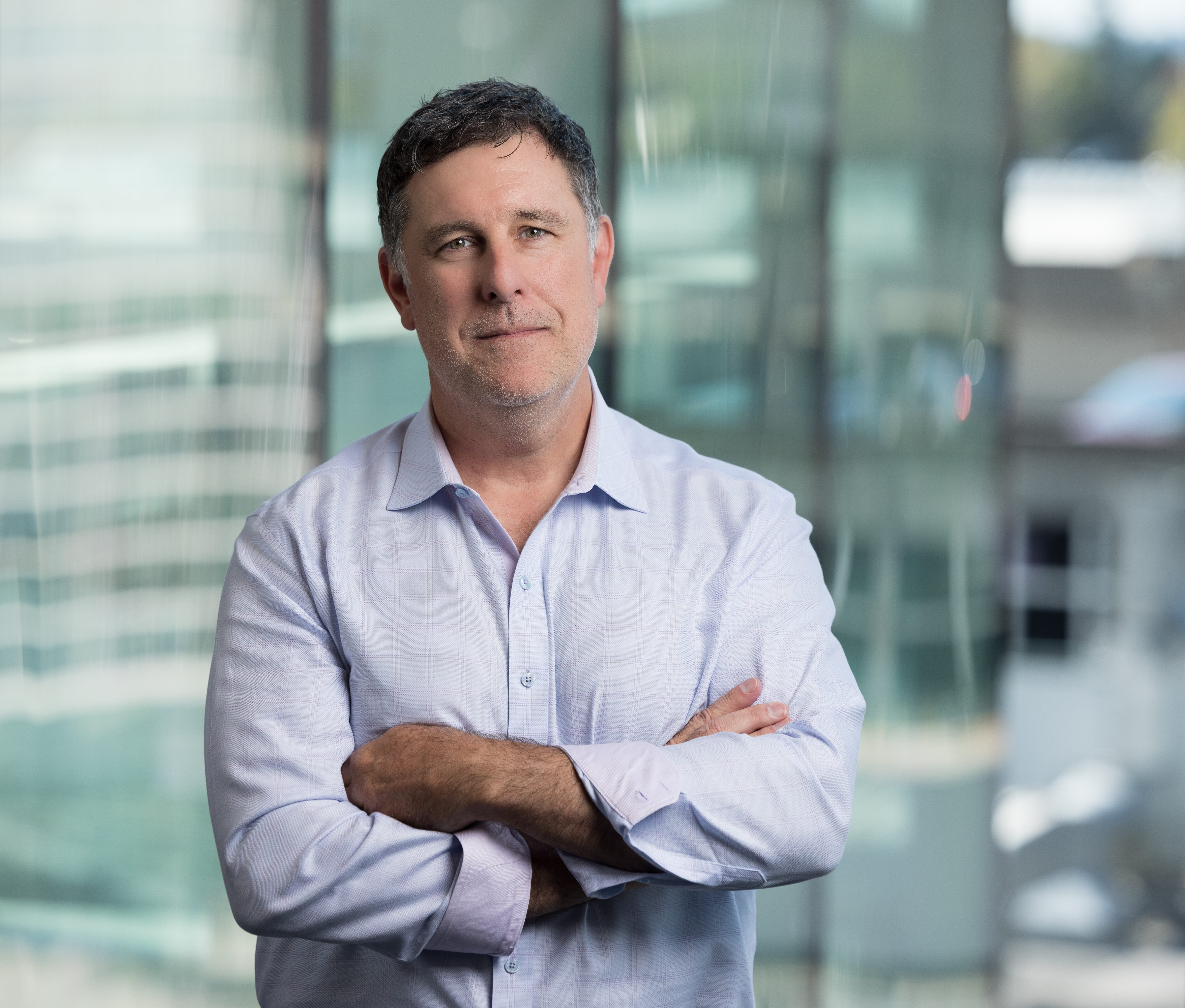
Seattle, WA — June 2, 2025 — Keystone.ai, a technology and services firm specializing in enterprise AI, economics, and technology advisory, today announced the appointment of Brad Miller as President of CoreAI. Based in Seattle, Miller will lead the company’s CoreAI business and its Deep Enterprise™ AI platform. He joins Keystone from Moderna, where he served as Chief Information Officer and spearheaded one of the biopharma industry’s most advanced AI transformations. Miller brings over three decades of experience transforming technical complexity into strategic advantage. At Moderna, he was a pioneer in enterprise AI, leading one of the industry’s earliest and most successful deployments of ChatGPT through the creation of mChat—a secure, award-winning GenAI platform. Under his leadership, Moderna embraced AI at scale, with thousands of specialized GPTs created across all enterprise business units and functions, fundamentally changing how the company operates. He also drove the commercial technology strategy, resulting in Moderna becoming Keystone’s CoreAI inaugural customer, co-developing and launching an AI-powered forecasting demand model and intelligent control tower. This initiative dramatically enhanced demand visibility, optimized last-mile distribution, and delivered measurable improvements in operational efficiency and cost performance. “Brad isn’t just joining Keystone—he’s returning as one of our most forward-leaning partners,” said Greg Richards, CEO and co-founder of Keystone. “Like much of our team, he started his career building tech for scale at Amazon and Microsoft. He has also led real transformation inside complex, global heterogenous environments. He knows exactly what it takes to help enterprises execute with AI. I am thrilled to welcome him to the team.” Before Moderna, Miller spent over a decade modernizing legacy enterprise systems into cloud- and AI-ready platforms. He held leadership roles including Chief Information Officer of Enterprise Products and Platforms at Capital One, Executive Vice President of Operations and Technology at Mastercard, and Head of Global Digital and Cloud Technology at Citibank. He also spent 17 years in engineering and development roles at Amazon and Microsoft. “Keystone has brought together one of the most extraordinary teams I’ve encountered—a team of visionary AI scientists, economists, machine learning engineers, operators and change managers who have built some of the most advanced forecasting and supply chain AI systems in the world,” said Miller. “The opportunity ahead is one where decisions are driven by science, grounded in data, and accelerated by intelligence. My mission is to embed AI as the scientific engine behind every critical decision our customers make—bringing clarity to complexity, precision to planning, and measurable impact to every corner of the business.” To learn more about Keystone and its services, visit www.keystone.ai. About Keystone.ai Keystone.ai is a global technology and services firm specializing in enterprise AI, economics advisory and technology strategy. Keystone’s Deep Enterprise™ AI platform—built by AI/ML industry pioneers—helps large enterprises optimize business decisions at scale. By combining advanced technology, strategic consulting, and applied econometrics, Keystone delivers innovative solutions to organizations across the technology, business, legal, and government sectors. Founded in 2003, Keystone operates globally with offices in New York, San Francisco, Boston, Seattle, London, and Dubai. For more information, visit www.keystone.ai.

Demand forecasting is the cornerstone of efficient supply chain management, enabling businesses to optimize inventory, production, and distribution. However, traditional forecasting methods often struggle to keep up with the complexities of today's dynamic markets. Factors like moving holidays, slow-moving SKUs, and the need to incorporate various signals like inventory levels and external demand data create significant forecasting challenges.A new generation of forecasting solutions powered by pre-trained AI models is emerging to tackle these challenges head-on. These models are revolutionizing demand forecasting by:Learning From Across Data Points: Unlike traditional methods that often focus on individual time series, pre-trained AI models can learn from vast datasets encompassing diverse products, regions, and time periods. This cross-learning allows them to identify subtle patterns and relationships that would be missed by conventional approaches. Imagine an AI model that recognizes how a promotion in one region impacts sales of a similar product in another, leading to more accurate and insightful forecasts.Refining Pre-Trained Models on Your Own Datasets: While pre-trained AI models come with a wealth of knowledge, they can be further refined using your own historical data. This fine-tuning process allows the model to adapt to the unique nuances of your business, products, and market, resulting in even greater accuracy and relevance.Here's how these advancements address specific forecasting challenges:Moving Holidays: Traditional methods often struggle to account for the variable timing of holidays like Easter or Chinese New Year. AI models can learn these patterns from global data, ensuring accurate forecasts even with shifting holiday dates.Slow-Moving SKUs: Products with intermittent demand patterns can be difficult to forecast. AI models can identify subtle signals and trends across similar products, improving forecast accuracy for these challenging items.Signal Incorporation: AI models can seamlessly integrate a wide range of signals, going beyond just basic demand data. This includes any time-varying variables such as price fluctuations, promotions, inventory levels, macroeconomic indicators, and market trends to capture a more complete picture of demand drivers.Benefits of Pre-Trained AI ModelsImproved Accuracy: AI models can significantly improve forecast accuracy compared to traditional methods, leading to better inventory management, reduced costs, and increased customer satisfaction.Increased Efficiency: Automated AI-powered solutions can streamline the forecasting process, freeing up valuable time for planners to focus on strategic initiatives.Enhanced Agility: AI models can quickly adapt to changing market conditions, enabling businesses to respond more effectively to disruptions and opportunities.A Call to SkepticsThe potential of pre-trained AI models in demand forecasting is undeniable. However, I understand that you may have questions or concerns. I encourage those who are skeptical to share their thoughts and challenges in the comments below. Let's engage in a constructive discussion about how AI can transform demand forecasting and drive better business outcomes.Start the conversation and learn more about Keystone’s CoreAI Solutions by reaching out to us at info@keystone.ai.

Generating Success with Generative AI: How Businesses Are Leveraging LLMs in Operations As Generative AI (GenAI) moves from theoretical promise to practical deployment, Keystone set out to understand how organizations across various sizes and digital maturity levels are introducing and using GenAI to meet their goals. Based on a comprehensive survey of 238 organizations fielded in April 2024, our team noticed distinct patterns, including: • Stratification in the market and in GenAI strategies based on company size • Digital transformation maturity levels significantly impact how effective companies are at leveraging and measuring value from GenAI tools • Only 10% of organizations experienced issue-free GenAI deployments, highlighting the importance of thoughtful governance • And more DOWNLOAD THE REPORT Inside This Report Get detailed insights and data on: • Implementation patterns across company sizes and maturity levels • Industry-specific adoption trends and use cases • Common challenges and success factors in GenAI deployment • Practical frameworks for assessing and implementing GenAI initiatives DOWNLOAD THE REPORT

New York, NY (September 18, 2024) – Keystone, the leading strategy, economics and technology consultancy providing AI-driven services to large companies, government agencies and law firms, today announced the appointment of Dr. Susan Athey as Chief Scientific Advisor. Drawing from an illustrious and multidimensional career in academia, Big Tech and government, Athey will contribute economic and econometric counsel to the firm’s CoreAI division, which offers operational and commercial AI services, algorithms and systems to large enterprises, and advise its Global Economic and Technology Advisory (ETA) group, which provides economic analysis and expert testimony in legal disputes and regulatory matters. Her appointment marks the fourth senior executive hire to the CoreAI team in the past 12 months and underscores the firm’s continued expansion of its team of world-class data scientists, economists and engineers.“Dr. Athey is one of the most widely respected economists in the United States, and her skills and leadership are unique in that they have always been multidisciplinary. For over 20 years, she’s been the leading voice on the value of combining technical expertise with rigorous economic analysis and business insight – a philosophy we share, as our firm was designed around these practices from the start,” said Jeff Marowits, President of Client Services at Keystone. “We are thrilled to welcome Dr. Athey back to the firm in this new role and look forward to continuing our work together to solve the most complex operational and regulatory AI challenges facing organizations today.”As Chief Scientific Advisor, Dr. Athey will provide strategic guidance on CoreAI’s solutions. She joins a distinguished team that includes Patrick Bajari, CoreAI’s Chief Economist and former Chief Economist of Amazon, and Devesh Mishra, President of CoreAI and former Vice President of Global Supply Chain at Amazon. CoreAI offers a powerful combination of pre-trained foundation models, customized algorithms and personalized services.“CoreAI works with clients to build, operate and transfer customized AI/ML solutions solving specific operational challenges and automating deep decision-making for functions including supply chain optimization, forecasting, attribution and more,” said Mishra. “Susan’s expertise in AI/ML, economics and business will be invaluable in delivering transformative solutions to our clients.”Reflecting on her decision to rejoin the firm, Dr. Athey said, “Keystone is the only consultancy with the distinct combination of expertise in economics, technology and strategy that mirrors my own training and work. I’ve been a longtime admirer of the firm Marco Iansiti and Greg Richards founded and am pleased to return as an advisor to help companies navigate this next wave of machine learning and show academics that they can play an important role in solving these new causal problems we’re facing.”Dr. Athey has had a stellar academic career over the last three decades. She is currently the Economics of Technology Professor at the Stanford University Graduate School of Business, where she was a founding associate director of the Stanford Institute for Human-Centered Artificial Intelligence and currently serves as the founding faculty director of the Golub Capital Social Impact Lab at Stanford GSB. She previously served on the faculty of the economics departments at Harvard, MIT and Stanford. Dr. Athey is an elected member of the National Academy of Sciences and is the recipient of the John Bates Clark Medal, awarded by the American Economic Association to the economist under 40 who has made the greatest contributions to economic thought and knowledge. She was also the 2023 President of the American Economic Association.Outside of her academic career, Dr. Athey is celebrated as one of the first “tech economists.” She served as the Chief Economist of Microsoft for six years, where she worked on operation and strategy for the Bing search engine as well as the strategy that took the company into cloud computing with the launch of its Azure platform. She also helped create and grow a team of researchers working at the intersection of social science and machine learning. Subsequently, she served on the boards of directors of multiple technology firms, including Expedia, Lending Club, Rover, Turo and Ripple.Most recently, she served as Chief Economist of the Antitrust Division at the Department of Justice, completing her two-year term as of June 30, 2024. Dr. Athey played a leading role in drafting the 2023 Merger Guidelines which addressed new topics such as platform competition, and led the DOJ to build a new internal team of data scientists and technologists.“Dr. Athey is the premier thought leader in AI- and ML-enabled econometric modeling, and few, if any, other experts have the unique combination of government and business experience she has,” said Jennifer Redmond, Keystone Partner and co-head of the firm’s Antitrust & Competition practice. “The emergence of ChatGPT has unleashed a series of regulatory questions and concerns from both regulators and business leaders amid increasing competition enforcement. Dr. Athey will be an important thought partner on critical regulatory and legal matters for our clients and will strengthen our capacity to deliver unrivaled econometric techniques to improve businesses’ operating models.”###About Keystone StrategyKeystone Strategy, LLC (“Keystone”) is a leading innovative strategy, economic, and technology consulting firm dedicated to delivering transformative ideas and cutting-edge solutions to Fortune Global 500 companies, top law firms, and government agencies. Keystone combines experience in digital transformation, data platform design, analytics, AI and information risk to deliver bold strategies with far-reaching implications for business, consumers, and public policy. It also possesses unique expertise in litigation, M&A, and regulatory policy in matters involving competition, consumer protection, IP, tax and transfer pricing, securities and finance, data privacy, and healthcare. Keystone boasts a roster of hundreds of top academic experts in the digital economy and innovation sectors, supported by more than 175 professionals. The firm has offices in New York, San Francisco, Boston, Seattle, and London. Learn more about Keystone at www.keystone.ai. Media ContactRob ChedidHead of Marketing and Communicationsrchedid@keystone.ai


On Monday March 9, in an effort to address soaring patient demand in Boston, Partners HealthCare went live with a hotline for patients, clinicians, and anyone else with questions and concerns about Covid-19. The goals are to identify and reassure the people who do not need additional care (the vast majority of callers), to direct people with less serious symptoms to relevant information and virtual care options, and to direct the smaller number of high-risk and higher-acuity patients to the most appropriate resources, including testing sites, newly created respiratory illness clinics, or in certain cases, emergency departments. As the hotline became overwhelmed, the average wait time peaked at 30 minutes. Many callers gave up before they could speak with the expert team of nurses staffing the hotline. We were missing opportunities to facilitate pre-hospital triage to get the patient to the right care setting at the right time. The Partners team, led by Lee Schwamm, Haipeng (Mark) Zhang, and Adam Landman, began considering technology options to address the growing need for patient self-triage, including interactive voice response systems and chatbots. We connected with Providence St. Joseph Health system in Seattle, which served some of the country's first Covid-19 patients in early March. In collaboration with Microsoft, Providence built an online screening and triage tool that could rapidly differentiate between those who might really be sick with Covid-19 and those who appear to be suffering from less threatening ailments. In its first week, Providence's tool served more than 40,000 patients, delivering care at an unprecedented scale. Keystone Strategy's Colleen Carroll and Marco Iansiti outline why our national health system cannot keep up with this kind of explosive demand of the coronavirus without the rapid and large-scale adoption of digital operating models. Below is a summary from the article published in Harvard Business Review on April 3, 2020.Summary. The spread of Covid-19 is stretching operational systems in health care and beyond. The reason is both simple: Our economy and health care systems are geared to handle linear, incremental demand, while the virus grows at an exponential rate. Our national health system cannot keep up with this kind of explosive demand without the rapid and large-scale adoption of digital operating models.While we race to dampen the virus's spread, we can optimize our response mechanisms, digitizing as many steps as possible. Here's how some hospitals are employing artificial intelligence to handle the surge of patients.Read the entire article on HRB.com here.
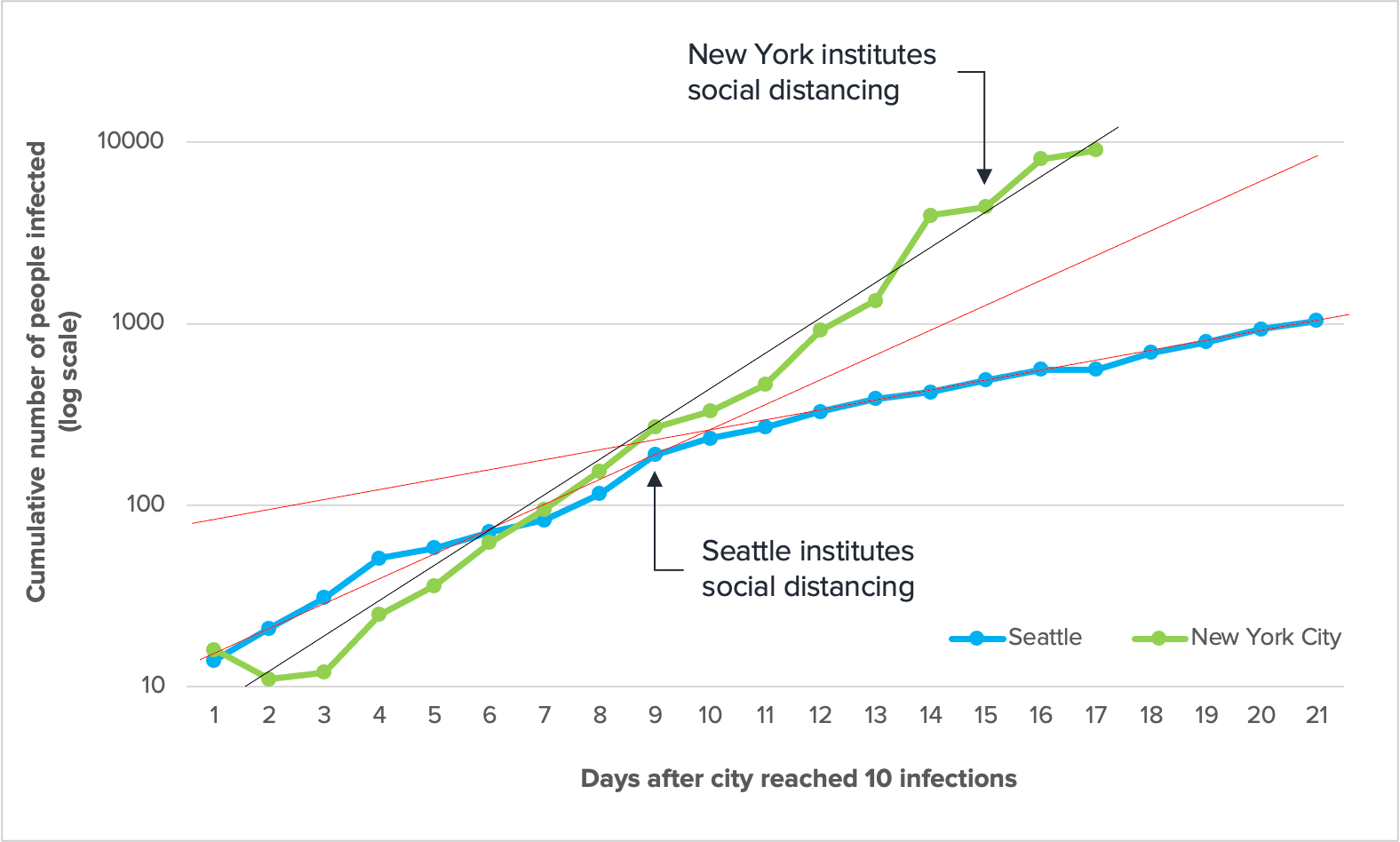
Insufficient data has complicated the rollout of Coronavirus (COVID-19) “Non-Pharmaceutical Interventions” (NPIs) such as the closing of schools. Keystone has partnered with Susan Athey, Stanford Professor of Economics, and Marco Iansiti, Director of Harvard Business School's Digital Initiative, to estimate the effectiveness of NPIs as a guide to policymakers, and to aid firms in developing strategic responses, respectively. We are building a comprehensive, highly localized and freely available data set of city, county and state rollout dates for NPIs. For more information or data access, contact us. NPIs INCLUDE: SDO - Social Distancing of vulnerable persons; SD - Social Distancing of the general population; GS_XX - Gathering Size limitations; CPV - Closure of Public Venues; PC - Closure of schools and universities; NESC - Non-Essential Services Closure; LD - Lock Down (pending); 650 US Counties Covered as of 6/18/2020 (additions in progress). A sample of counties below (additions in progress). To see the full list click here. A sample of counties below: Alameda County, CA Bergen County, NJ Bexar County, TX Contra Costa County, CA Cook County, IL Dallas County, TX Denver County, CO Dupage County, IL Fulton County, GA Hudson County, NJ Johnson County, KS King County, WA Lake County, IL Las Vegas County, NV Los Angeles County, CA Miami Dade County, FL Middlesex County, Ma Nassau County, NY New York City, NY Norfolk County, MA Rockland County, NY San Diego County, CA San Francisco County, CA San Mateo County, CA Santa Clara County, CA Snohomish County, WA Suffolk County, MA Washington, DC Wayne, County, MI Westchester County, NY Please see link to this Shared Google Doc for more information. If you or any of your colleagues would like to expand our dataset to include other countries and/or U.S. cities and counties not yet included, please point them to our links below. With your help sharing these links on social media and via your own networks, we can improve the data set and broaden our initial scope. Request Data: [hubspotform portal_id="6724850" form_id="3655434e-36ed-4659-b7bc-5d7060dfea46" css=""] PUBLISHED PAPERS USING THE KEYSTONE DATASETS FOR NPIs As of November 2, 2021, there have been 19 academic articles published leveraging this dataset. You can find the entire list on Google Scholar here with select articles highlighted below. Scenario analysis of non-pharmaceutical interventions on global COVID-19 transmissions Arvix This paper introduces a dynamic panel SIR (DP-SIR) model to investigate the impact of non-pharmaceutical interventions (NPIs) on the COVID-19 transmission dynamics with panel data from 9 countries across the globe. What works against the spread of COVID-19? Medium With more detailed data on the varying introduction of policies across US counties and over time as well as the resulting spread of the disease we could provide evidence on which measures we should keep and which measures we should lift in order to reactivate the economy. Income Effect and the Private Contribution of Public Goods:Household Mobility and the Economic Impact Payment during the COVID-19 Pandemic Binghamton University This paper studies the public good nature of COVID-19 mitigation effort, and illustrates the relationship between income level and the voluntary contribution to the COVID-19 mitigation effort. Weather, Social Distancing, and the Spread of COVID-19 MedRxiv Using high-frequency panel data for U.S. counties, this paper examines the full dynamic response of COVID-19 cases and deaths to exogenous movements in mobility and weather. Policy Implications of Models of the Spread of Coronavirus: Perspectives and Opportunities for Economists CESifo Working Papers A critical review of models of the spread of the coronavirus (SARS-CoV-2) that have been influential in recent policy discussions. It notes potentially important features of the real- world environment that standard models do not incorporate. The COVID-19 Shock and Consumer Credit: Evidence from Credit Card Data US Federal Reserve Using monthly credit card data from the Federal Reserve's Y-14M reports to study the early impact of the COVID-19 shock on the use and availability of consumer credit. Staggered Adoption of Nonpharmaceutical Interventions to Contain COVID-19 Across U.S. Counties: Direct and Spillover Effects Johns Hopkins Carey Business School We estimate direct and spillover effects of social distancing measures intended to slow the spread of COVID-19 at the U.S. county level using mobility indicators based on cellphone data. We find that spillover effects range between a third and a half of the direct effect depending on the particular outcome or policy considered. Our results suggest that decentralized NPI decisions, which does not internalize externalities generated on surrounding locations, could result in lower NPI implementation and weaker reduction in mobility, and hence more personal contacts and interactions in leisure and work activities, which are the main driver of the COVID-19 transmission. Tracking the Economic Impact of COVID-19 and Mitigation Policies in Europe and the United States International Monetary Fund Here is a framework to use high-frequency indicators, such as electricity usage, for policymakers to assess the economic impact of COVID-19 in close to real time. We also examine the link between economic activity and mitigation efforts to help policymakers better understand the possible path of economic activity as lockdown measures are relaxed.

Below is a summary from the article published in Harvard Business Review in March 26, 2020.Summary. The dramatic speed of the operating-model transformation prompted by the coronavirus is raising truly existential challenges for traditional firms, and for the many employees that depend on them for income. That's because an existing digital transformation effort that's creating competitive advantages for select companies has been thrust into the realm of the workplace itself. Firms that are already far along this transformation will transition smoothly as in-person work is less necessary or even preferable, while many others will struggle. This is creating a new digital divide that will deepen fractures in our society. Can business and government save us from that future? Read the entire article on HRB.com here.

Originally published on February 25, 2020 in Forbes by Sophia Matveeva a Former Forbes Contributor and startup founder in retail tech. Artificial Intelligence is the new fashionable trend in business. While many large corporates create skunkworks for experimental technologies or acquire startups, few incumbent businesses have allowed AI processes to change the core of the organization. This could be because executives in traditional businesses have little understanding of how these technologies work and are unwilling to take the risk of investing in something they do not understand. A recent book by two Harvard Business School professors attempts to deal with this issue. Competing in the Age of AI: strategy and leadership when algorithms and networks run the world presents a compelling case for putting AI at the center of the business. Any business. Authors Marco Iansiti and Karim R. Lakhani show the example of Ant Financial, which serves more than 10 times as many customers as the largest U.S. banks with less than one tenth the number of employees. That extraordinary combination of wide reach and low cost is possible because Ant Financial uses data and artificial intelligence from its core mobile payments platform, Alipay. Read the entire article here.